Monsters have greatest visual impact when placed in the context of the familiar: Cybermen on the steps of St Paul’s Cathedral; Martians looming over Big Ben; King Kong atop the Empire State Building. The everyday imparts heightened bearing to the strange, especially if all is eerily quiet in the normally bustling metropolis, the alien as early riser. The main reason Godzilla attacks cities, though, is the opportunity to wreak spectacular devastation upon the show ponies of civilisation, to noisily pop the foci of governance and order (a secret wish?).
But monsters and villains exist to be defeated and, although it’s a raison d’être for superheroes – a complementary power neatly distilled in each – we love the opportunities that these encounters provide for the ordinary citizen. In blockbusters, underdogs do everyday stuff in a relatable setting before things kick off. But here comes the blundering, tentacled, untouched-by-God behemoth or the elaborate, networked predator, jaws like Russian dolls, intent upon our earth and souls; arise tenacity and resourcefulness to disentangle our protagonist from the fleeing populace, so that their niche skill or obscure knowledge may be leveraged to rescue all humanity, at least until the sequel.
Siding with the underdog sees expression in everything from the World Cup to the ongoing defence of Ukraine to way back into the Old Testament, as evidenced in the enduring popularity and cultural reach of the David and Goliath story [1 Samuel 17]. Just like a superhero, the giant Philistine Goliath is a personification of the boundary between the familiar and strange, one foot in each camp, but that did not phase David because he had faith on his side, plus transferable skills: the expertise with a sling and the self-reliance gained from time alone on the hills as a simple shepherd, guarding the flock from lions and bears (prelims to the Nat 5 leviathan). David viewed Goliath as just another large and angry predator, albeit a disrespectful and gobby one, and dealt with him accordingly. No fear, no messing about, pebble selected, job done. School of life, challenge and resilience.
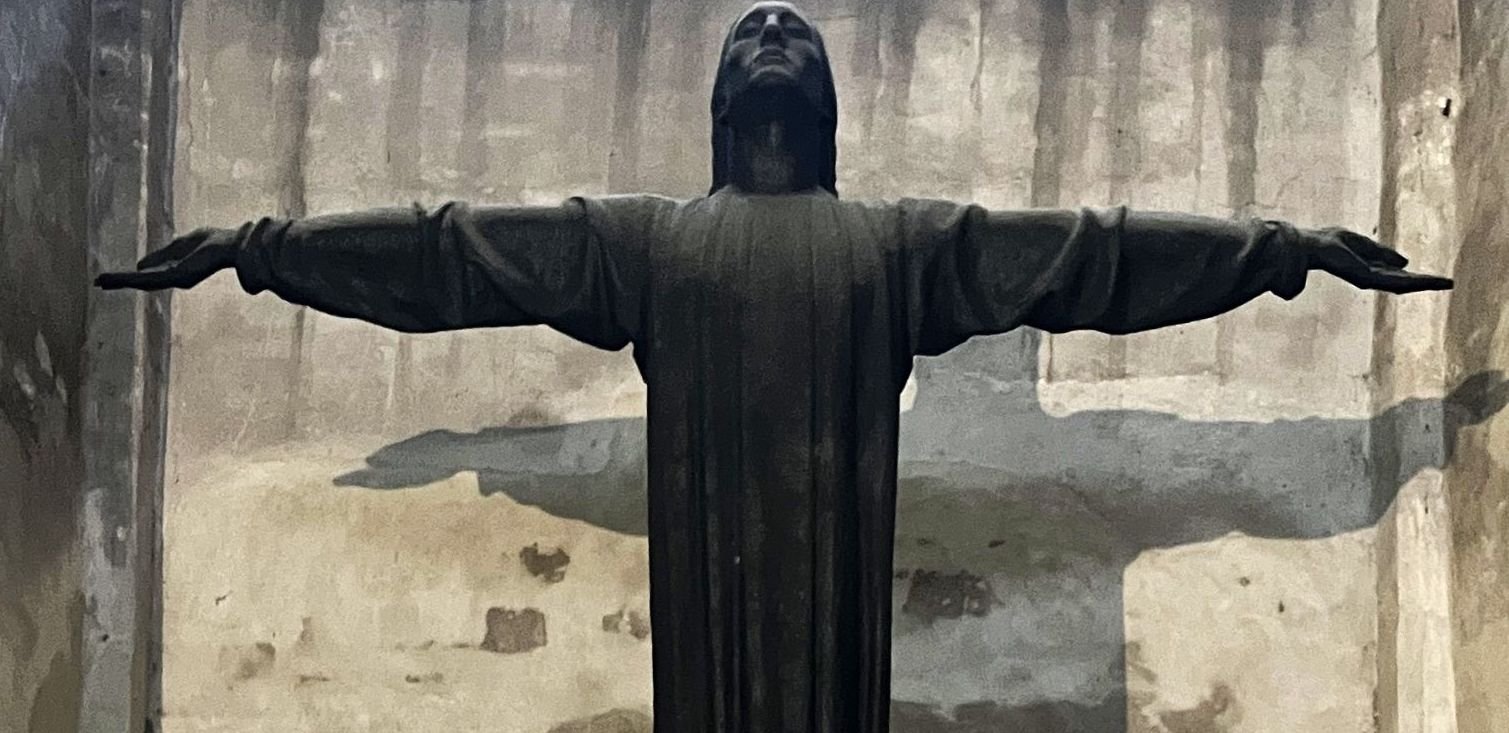
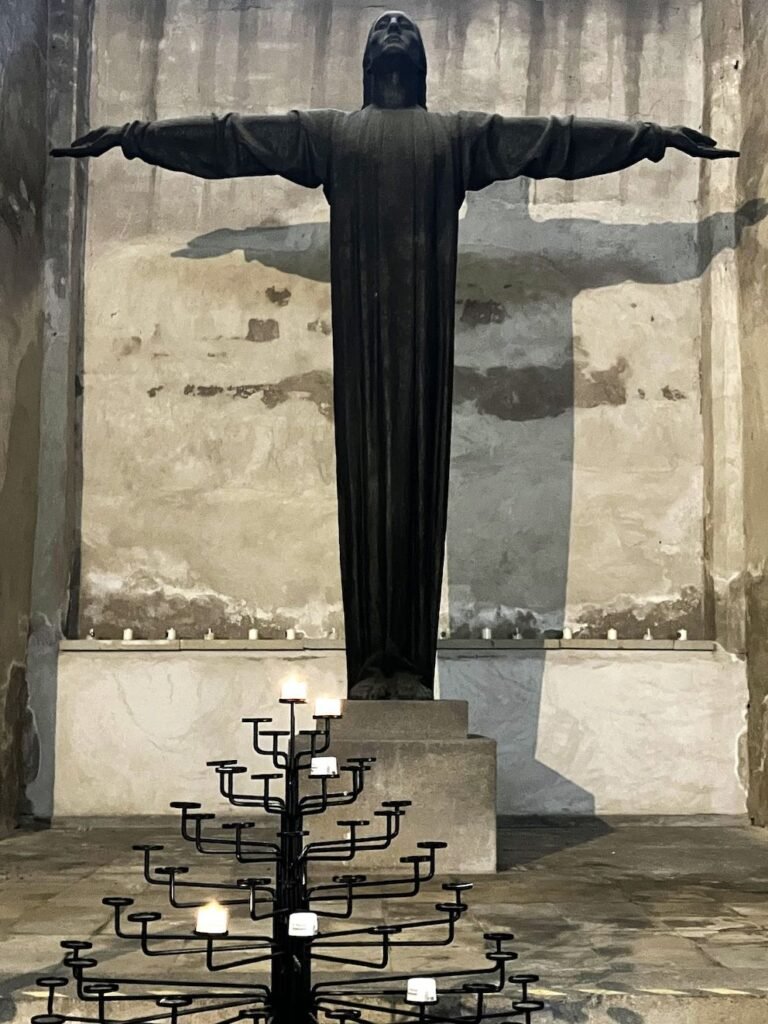
So where does Jesus fit into this accepted framework? Ever the paradox, Jesus at once confirms, questions and upends all that we understand about heroes and underdogs, victory and defeat. The Messiah was anticipated to be another David, a liberator by force, not an itinerant preacher armed only with wisdom, love and forgiveness. Prince of Peace, at one with the oppressed, perfection in weakness, yet intensely empowered – as captured in this striking war memorial, which we came across in the Church of St Nikolai, Stralsund, Germany. Provoking the ire of the Pharisees by placing grace and truth above the law, baffling the Roman authorities as to motivation, Jesus’ mission was destined to succeed in apparent failure. Evil had to win the battle in order to lose the war: crucifixion as triumph over the sins of the world; one ragged death to overturn an eternity of indifference. Humanity is quietly rescued, no stone cast, no sequel needed.
Colin Davey
Leave a Reply