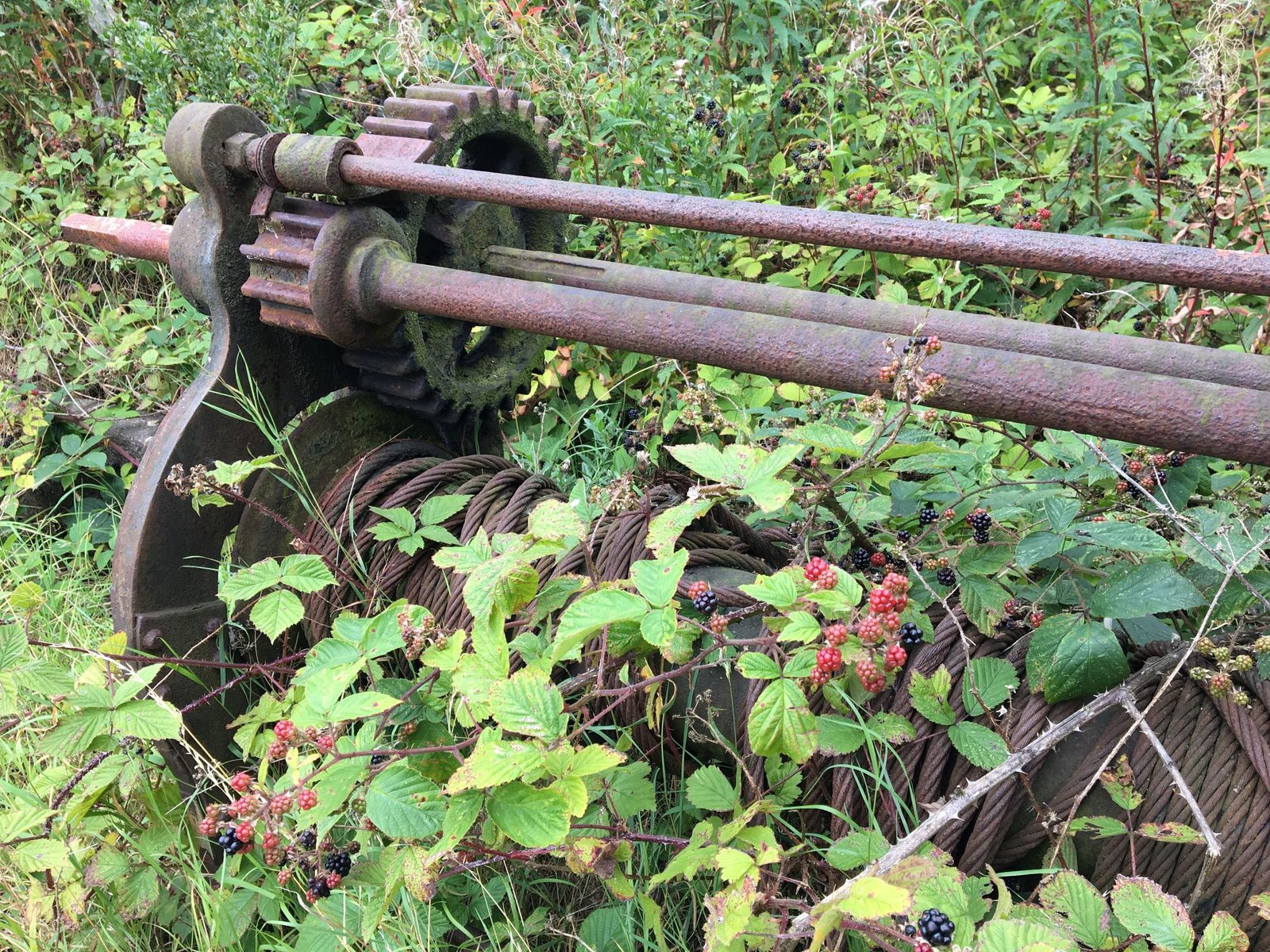
Antoine Lavoisier’s law of conservation of mass states that matter cannot be created or destroyed, only rearranged. Other than the odd satellite, outbound/returning spaceship (aliens are presumed to take themselves and their litter home) or meteor, the earth is a closed system for matter. We’re stuck with the building materials that we have. Round and round it goes, mixed up, watered, reshaped. Nothing of us is new. Rather, we are constructed from recycled dinosaurs, kings and queens (pharaohs excepted, owing to elaborate means to avoid recycling), saints and disciples (minus relics), daisies and snails, chestnuts and pears. It is wonderous to be made of such things and miraculous for the consciousness of a soul to emerge therefrom. Changing states through the use and reuse of matter is key to life on earth.
That said, the transformation of matter comes with less tangible benefits. Spring 2025 saw us at V&A Dundee (a terrific space, which is fortunate as it does seem to be mostly space), where we happened across A Fragile Correspondence, an exploration of the relationship between Scottish landscapes and language. One word in particular caught our attention: saunt. We learned that it means to disappear, perhaps suddenly or mysteriously, but leaving traces that persist immaterially, imprinted in the cultural landscape: in language, folklore, stories, tradition, social justice, and so on. In other words, the physical matter is transformed, but a distributed essence of its being remains. Saunt challenges us to recognise that progress cannot mean erasure but must reference and value what was there before, to allow the past to remain at the table, a persistent connection to the land and community (the word itself, originating in West Central Scots, speaks of past migrations).
The exhibition evoked saunt in the context of the former Ravenscraig steelworks, that fiery leviathan which dominated the Motherwell skyline until its closure in 1992 and subsequent demolition (in truth, its disappearance was neither sudden – except for the bits that were blown up – nor mysterious). This is a site that might now be labelled derelict or post-industrial, under redevelopment. But it is more than transitional, more than just what it might become: it has identity and value in itself, in how it speaks poignantly of the impacts of heavy industry but also of renewal, recovery and healing. It is all that it has been and more, good and bad.
This is where saunt also finds traction in faith, located as we are between the first and second coming of Christ. That Jesus remains present to us, perpetuated in our belief and convictions long beyond his physical – not spiritual – departure, is a bit of an understatement. The Church is so much more than a transitional stop-gap, bringing as it has billions of new souls to Jesus’ earthly teaching, to renewal and salvation. As to how the law of conservation of mass informs resurrection and eternal life, I have no idea (yet).
NB: Although the exhibition has closed, many traces persist online.
Colin Davey
Leave a Reply