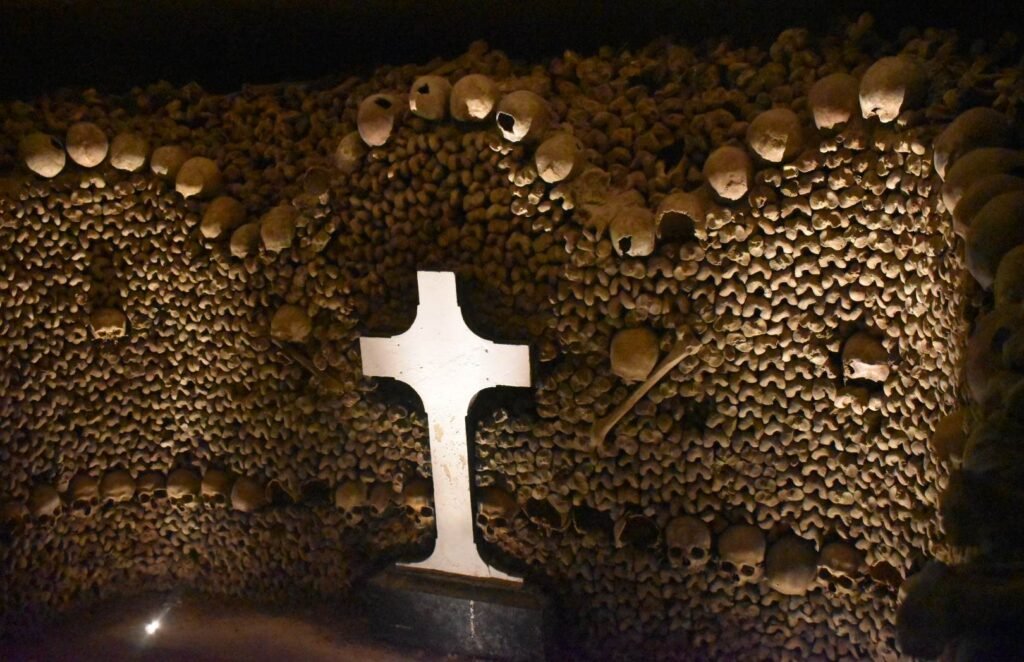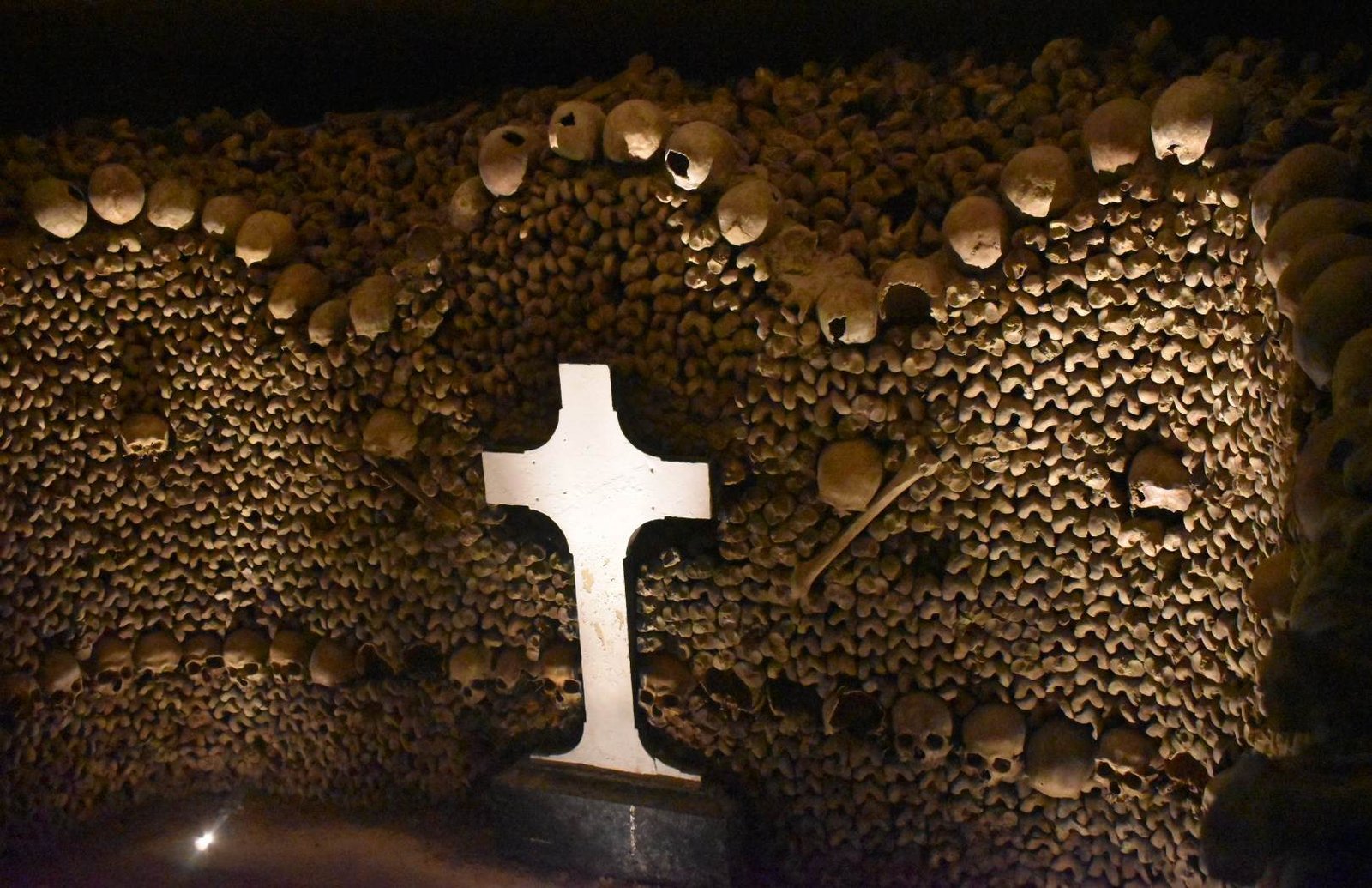
First, a brief history lesson. Paris was built upon subterranean voids created by quarrying limestone for its grand buildings. You might have spotted the flaw in this plan and, indeed, after several streets collapsed, it was decided to shore up these underground spaces, creating kilometres of work and inspection tunnels. In the late 18th century, in a radical solution to cemetery overcrowding – so much so that there are reports of bodies spilling into the basements of neighbouring houses – multiple graveyards in central Paris were cleared and the bones relocated to the tunnels, a grim but practical public-health solution that created les catacombes de Paris.
A visit to dimly lit passageways lined with human remains might seem the perfect Halloween outing, just the scary ticket, but the impression that they impart is quite different, unexpected. Here, stacked row upon row, lie the hollow bones of millions, each skull (if we may take that as our unit of measure) a life already lived: gilded aristocrat and bloody revolutionary, urchin, soldier, artist, priest, baker, politician, philosopher and thief, all jumbled up in a final levelling dash for liberté, égalité, fraternité. The sheer number and anonymity of these remains inspire disquiet and bewilderment, they are humbling and baffling, but they do not frighten. Rather, extracted from all context, Paris’ former citizens have become archaeological, artefactual, evidential. Here lie the skeletons but not the ghosts, and only the latter, a pale echo of life, can cause alarm to the living (that and the 40 Euros for a sweatshirt in the gift shop). In reality, it is the process of decay itself that scares us most, the decomposition of the soft bits that cradle our identity, that warm reassurance of living comfort, a heart that can be written on. Once these are gone, what’s left is just the hard machine within, the generic, bony stranger, a cartoonish nod to our own inevitable demise, a raising of the pirates’ flag.
Standing among the nameless, countless dead of les catacombes de Paris, removed from the world and from time, it is exceptionally challenging to extract anything positive, anything that speaks to hope or peace. I remember thinking: this can’t be it, surely; where are all these people now? But there is profound meaning here, and it’s in the very contrast with the characterful vibrancy of Parisian life playing out overhead, the city of light and love, of wide open spaces and grand vistas. In Paris, one is forever looking up and across, but we also need to look down sometimes, to pause and tap our compass. Bright young things, do you truly value your fragile, fleeting gift of life? There’s a stark warning beneath your feet, a quiet place among the dark and narrow tunnels. Regardless of our beliefs, life is clearly so precious that every hour of every day must be valued and cherished and lived well, fruitfully, not just for ourselves but for each other, for all. I find myself once again at liberté, égalité, fraternité.
Colin Davey